
The Quebec winter can be unforgiving for vine crops. Intense cold, temperature fluctuations, and winds can jeopardize the health of the grapevines. That’s why many winegrowers in Quebec use geotextile fabrics to protect their vines during the cold season.
Geotextile fabrics: essential protection
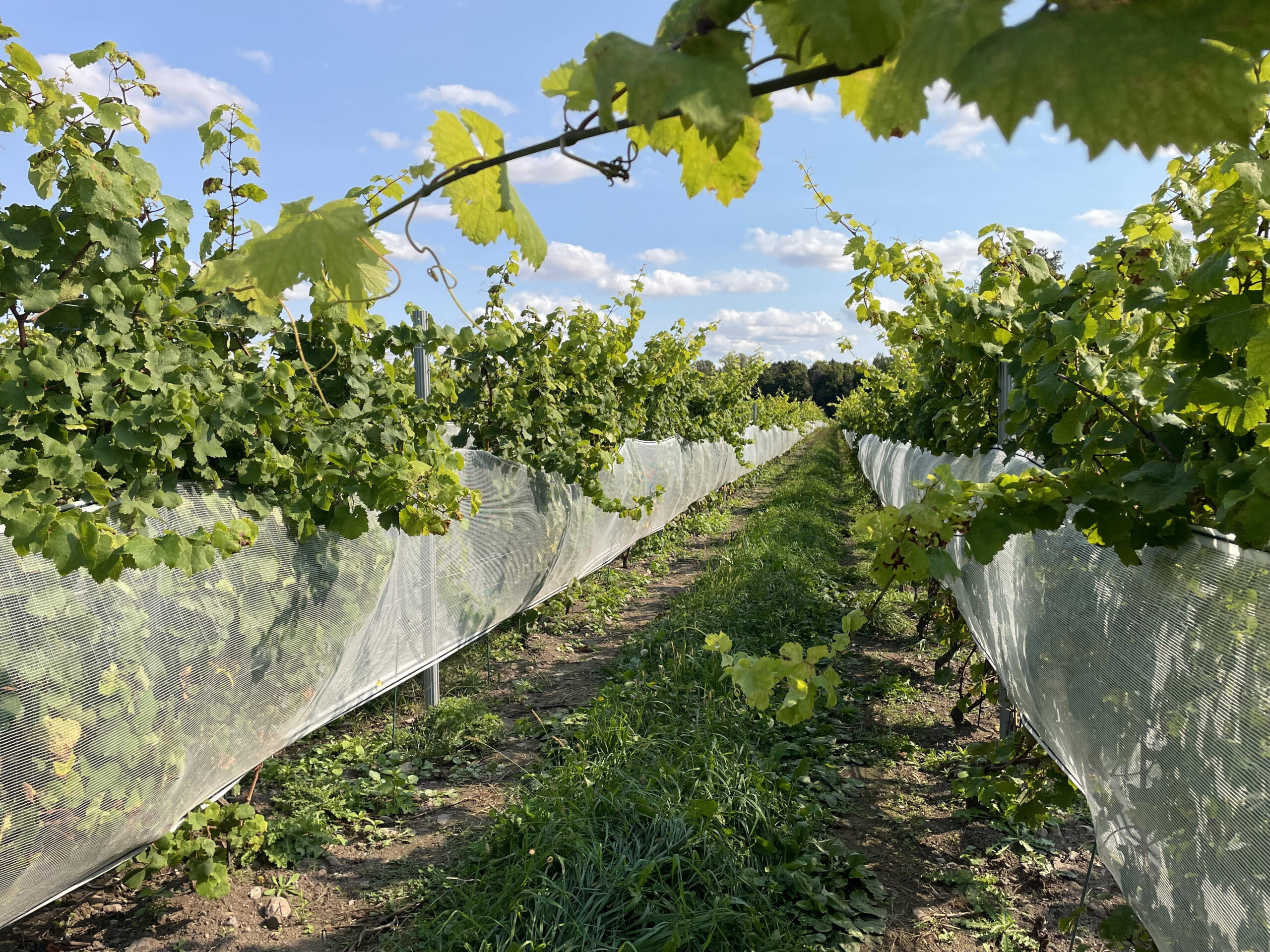
Geotextile fabrics are made from woven materials specially designed to withstand harsh winter conditions. They are supported by metal hoops placed above the vines, forming a kind of dome that protects the plants from frost, snow, and wind. In addition to providing thermal protection, these fabrics also allow air to circulate around the vines, letting them breathe and preventing mold from forming. The fabrics are securely anchored to the ground by burying each side a few inches into the soil along the vine row, preventing them from being blown away by the wind.
A significant temperature difference
One of the major advantages of geotextile fabrics is their ability to maintain a more stable temperature inside the protected space. On average, using geotextile covers can create a temperature difference of 4 to 6 degrees Celsius between the inside of the cover and the outside. This slight increase can make all the difference for vines. In Quebec, a vine can survive temperatures as low as -15°C to -20°C when protected under a geotextile cover.
The crucial time to remove the covers in spring
It’s essential to remove the covers at the right time. If they stay in place too long, the heat trapped inside can cause the vines to break dormancy too early, making them vulnerable to late frosts. Conversely, removing the covers too early can expose the vines to freezing damage. The ideal time to remove the covers is when outdoor temperatures stabilize around 10°C.
Conclusion
With Quebec’s harsh climate, winegrowers must rely on innovative techniques to protect their vines, such as geotextile covers. While winter brings its share of challenges, it also helps develop the vines’ unique resilience. This extreme climate forces the plants to draw on their reserves, producing grapes with complex aromas that reflect the strength and distinct character of our terroir.