
Method, Flavors, and Tasting Tips
When you think of summer at a vineyard, you often imagine a chilled glass of rosé, a sunny patio, and the sun setting over the rows of vines.
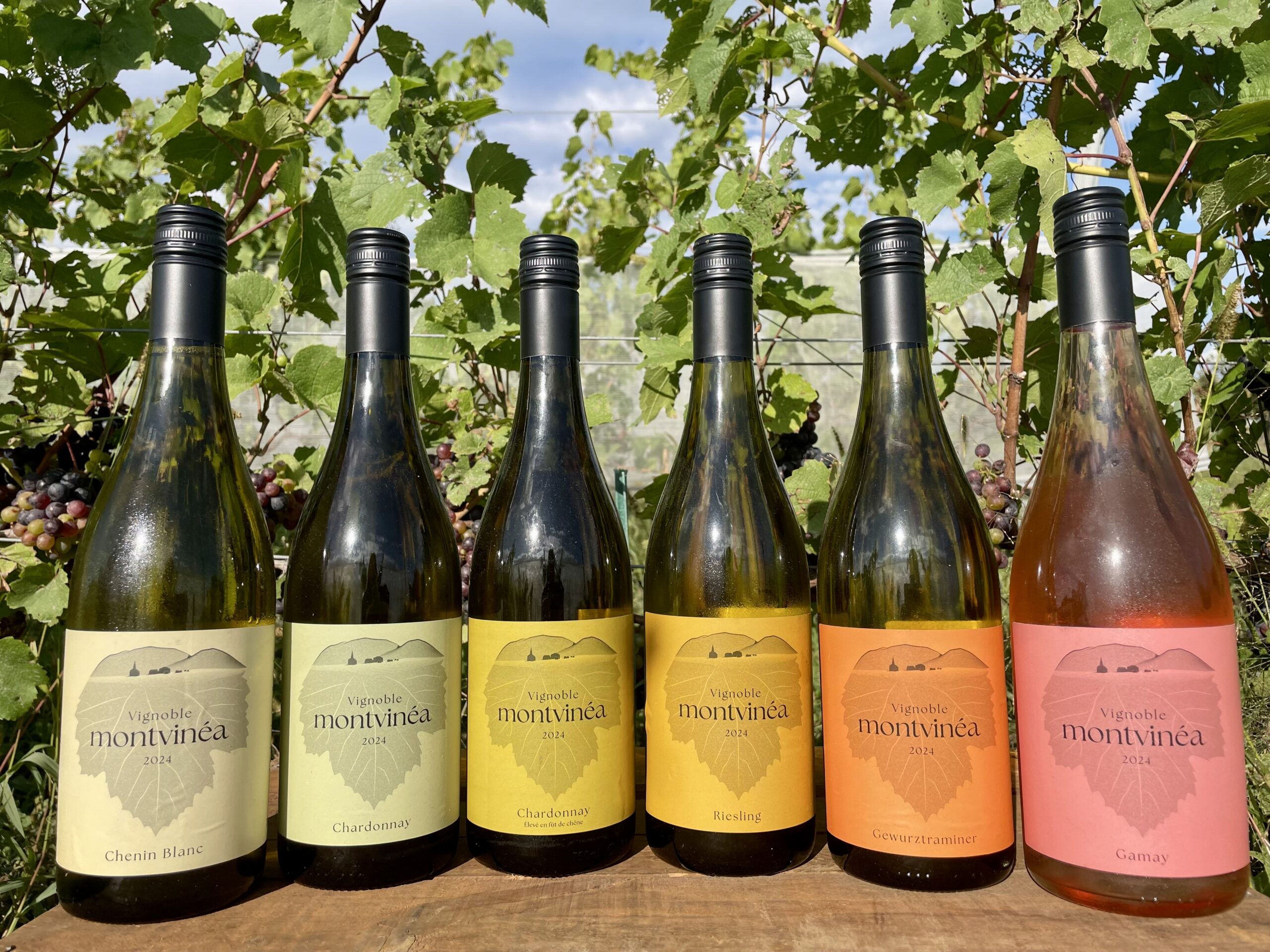
At Montvinéa, our Gamay Rosé embodies this very spirit:
a bright, delicious, easy-to-love wine… yet crafted with ultimate precision.
Because behind its freshness and apparent simplicity lie several key technical choices.
Here are the secrets behind our rosé: how we make it, what it tastes like… and how to enjoy it best.
Why Gamay for a Rosé?
Gamay is a naturally expressive and fruity red grape, perfect for light, vibrant wines.
It produces wines that are:
- supple
- low in tannins
- highly aromatic
- easy-drinking
In our Quebec climate, it uniquely develops:
- notes of fresh strawberry
- raspberry
- crisp cherry
- and occasionally a delicate floral touch
Everything you look for in a summer rosé.
Our Process: How Montvinéa Rosé Comes to Life
Contrary to popular belief, rosé is not a blend of white and red wine.
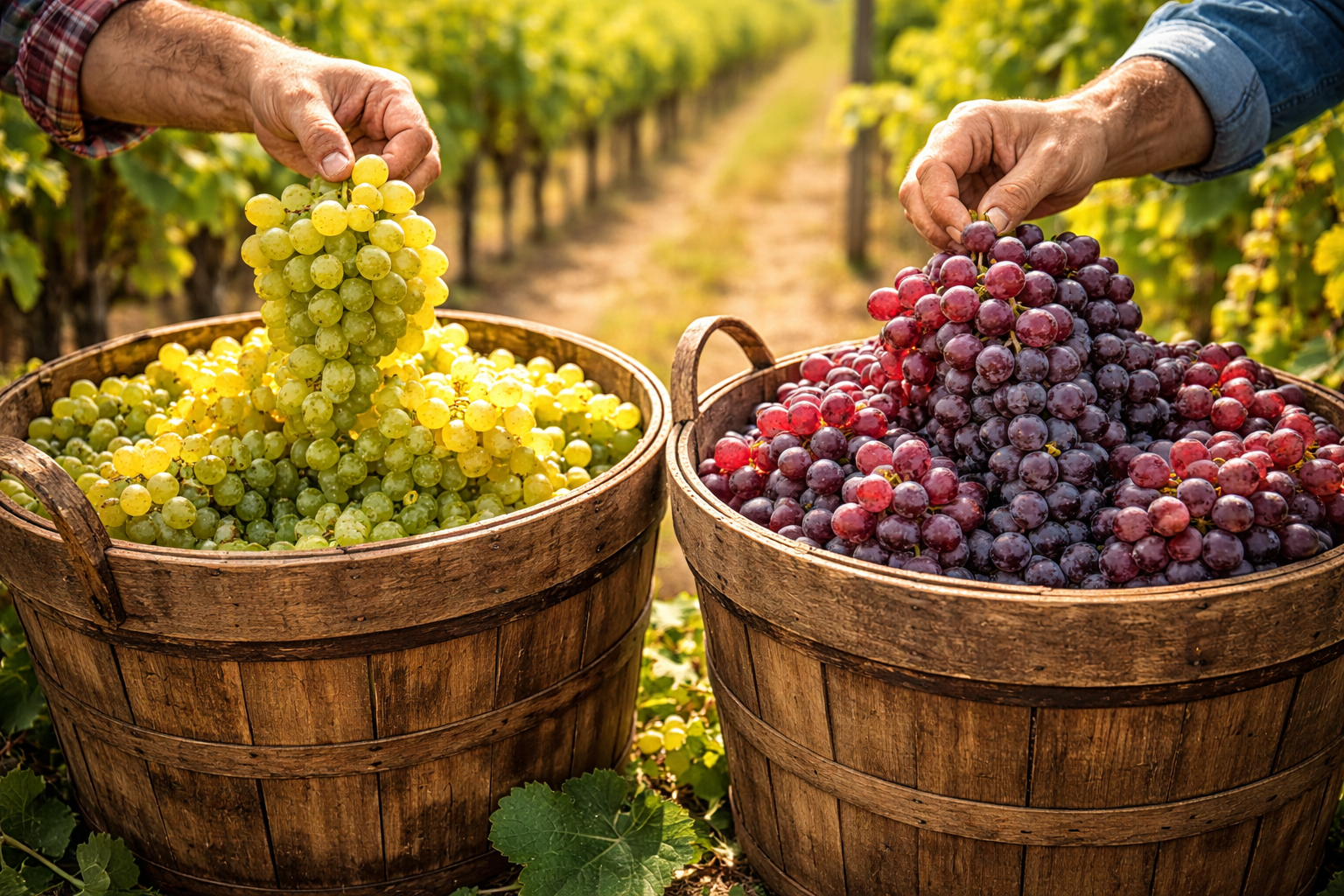
Its color comes entirely from natural contact between the juice and the skins of red grapes.
At Montvinéa, we favor a gentle, precise approach to preserve the freshness and finesse of the Gamay grape.
Here are the key stages.
Harvesting for Vibrant Freshness
The grapes are harvested when:
- the acidity is still crisp and lively
- sugar levels remain moderate
This yields a lighter, more thirst-quenching, and incredibly refreshing rosé.
For our rosé, we prioritize balance and freshness over power.
Gentle Destemming and Crushing
Once in the cellar, the clusters first undergo destemming.
The stems are removed to avoid introducing green or herbaceous flavors to the wine.
We are also careful not to crush the seeds, which can release harsh astringency.
Astringency is that dry, slightly rough feeling on the palate—much like drinking over-steeped tea. For a rosé, we are aiming instead for smoothness and freshness.
The grapes are then gently crushed between rollers, just enough to:
- break the skins
- release the juice and pulp
Without aggressive extraction.
The goal: working the fruit with ultimate delicacy.
Short Maceration: The Key to Rosé
The resulting mixture—called the must (juice, skins, pulp, and seeds)—then rests in tanks.
This is the maceration stage.
It allows us to extract:
- color
- aromas
- and a very subtle tannic structure
For a rosé wine, this maceration lasts only a few hours.
By comparison, a red wine may macerate for several days or weeks.
Pressing and Cold Fermentation
Following maceration, the juice is gently pressed and then fermented at low temperatures.
This slow fermentation helps to:
- preserve the aromas of fresh fruit
- maintain natural crispness
- keep the full purity of the grape variety
This is what gives our Gamay Rosé its bright, mouthwatering character.
Aromatic Profile: What Does Our Gamay Rosé Taste Like?
In the glass, it shows a bright, luminous pink hue.
On the Nose
- wild strawberry
- raspberry
- small red berries
- a delicate floral hint
On the Palate
- a lively, fresh entry
- supple texture
- crisp fruit flavors
- a clean, thirst-quenching finish
How to Enjoy It
Our Gamay Rosé is incredibly versatile, perfect for simple, shared moments.
Ideal for:
- patio happy hours
- picnics
- light meals
- summer evenings with friends
Favorite Pairings:
- ricotta & tomato crostini
- fresh salads
- grilled fish
- shrimp tacos
- mild cheeses
- charcuterie boards
Serving Temperature
Serve at 8–10°C (46–50°F).
Too cold → aromas are muted
Too warm → less refreshing
The perfect middle ground reveals its full freshness.
A Rosé That Reflects Montvinéa
Our Gamay Rosé is built on:
- the freshness of our terroir
- the precision of our cellar work
- the simple pleasure of sharing a glass
An unpretentious wine, crafted with care.
A wine for sunshine, patios, and laughter.
The bottle you open on a whim… perfect for sharing, laughing, and enjoying the moment.
Discover Our Gamay Rosé
To learn more about its detailed profile and availability:
See the full wine profile here:
🔗 https://montvinea.com/vins/gamay/