
In Quebec, grapevines live in harmony with the seasons. From the harshness of winter to the excitement of the harvest, each time of year plays an essential role in the health of the vine and the quality of the wine.
At Vignoble Montvinéa, vineyard care follows a precise natural cycle, which we have chosen to illustrate in our mural “Au fil des vignes” (Through the Vines)—an educational illustration designed to help our visitors understand the work that goes into winegrowing.
Here is how the vineyard is cared for throughout the seasons, from winter rest to the harvest.
Winter: The Vines’ Rest
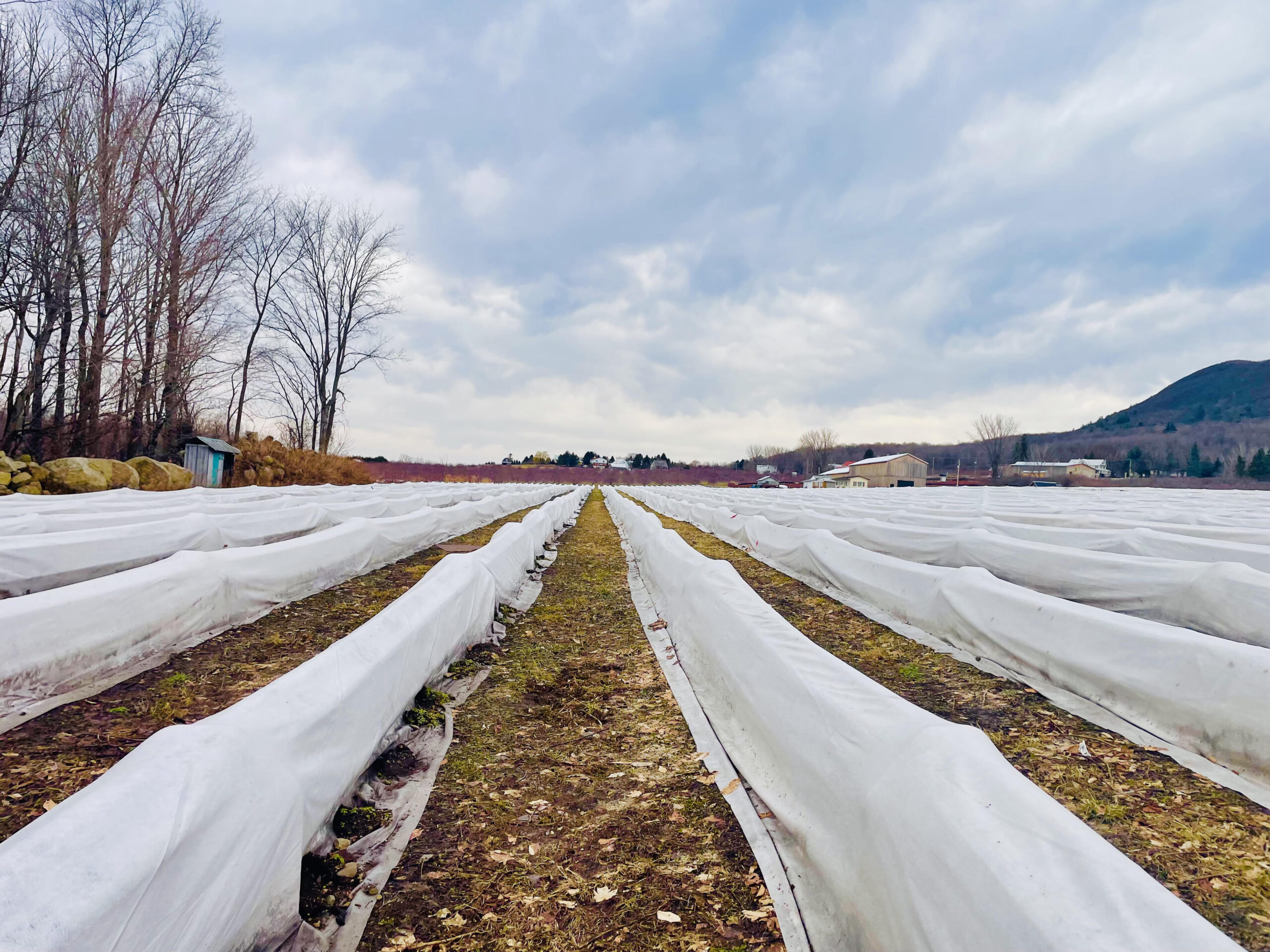
After the harvest and leaf fall, the vine enters dormancy. This is an essential resting period during which:
- the sap flows back down into the roots
- the vine regenerates
- and it stores the energy required for the upcoming season
Even though the vineyard seems asleep, winter is a key phase of the annual cycle.
Pruning: Preparing the Future Harvest
At the end of winter and the beginning of spring comes pruning time.
This step involves:
- removing the previous year’s wood
- structuring the vine
- and controlling vigor and yield
Pruning is a fundamental task: it determines the balance between vegetative growth and grape production. Careful pruning prepares the vine to produce high-quality clusters.
Spring: Budburst
As the warmth returns, the vine wakes from its dormancy. This is the moment of budburst, when the first buds appear, signaling the beginning of a new growth cycle.
This is a delicate period:
- young shoots are highly sensitive to late spring frosts
- constant monitoring is essential
The vine slowly begins its lifecycle once again after the winter cold.
Flowering: The Birth of Future Clusters
A few weeks later, flowering occurs.
Tiny flowers appear and gradually transform into fruit. This is a crucial stage because:
- it directly influences the number of grape clusters
- and it determines the year’s yield
Stable weather conditions encourage even flowering and successful fertilization.
Fruit Set and Growth
After flowering, clusters form and begin to grow.
During this period, vineyard care is essential to:
- balance the canopy
- encourage air circulation
- and optimize sun exposure
This canopy management allows the grapes to develop healthily and evenly.
Netting: Protecting the Harvest
As the grapes near ripeness, they naturally attract birds.
Installing netting becomes necessary in order to:
- protect the clusters
- preserve the integrity of the harvest
- and prevent crop loss
This is an important step to ensure that the grapes can fully ripen without interruption.
Veraison: The Grapes Change Color
Veraison marks the beginning of the ripening process. The grapes:
- change color
- soften
- and accumulate sugars and aromatic compounds
This is a key moment when the vine concentrates its energy entirely into the fruit. The final quality of the wine truly begins to take shape.
Autumn: The Harvest
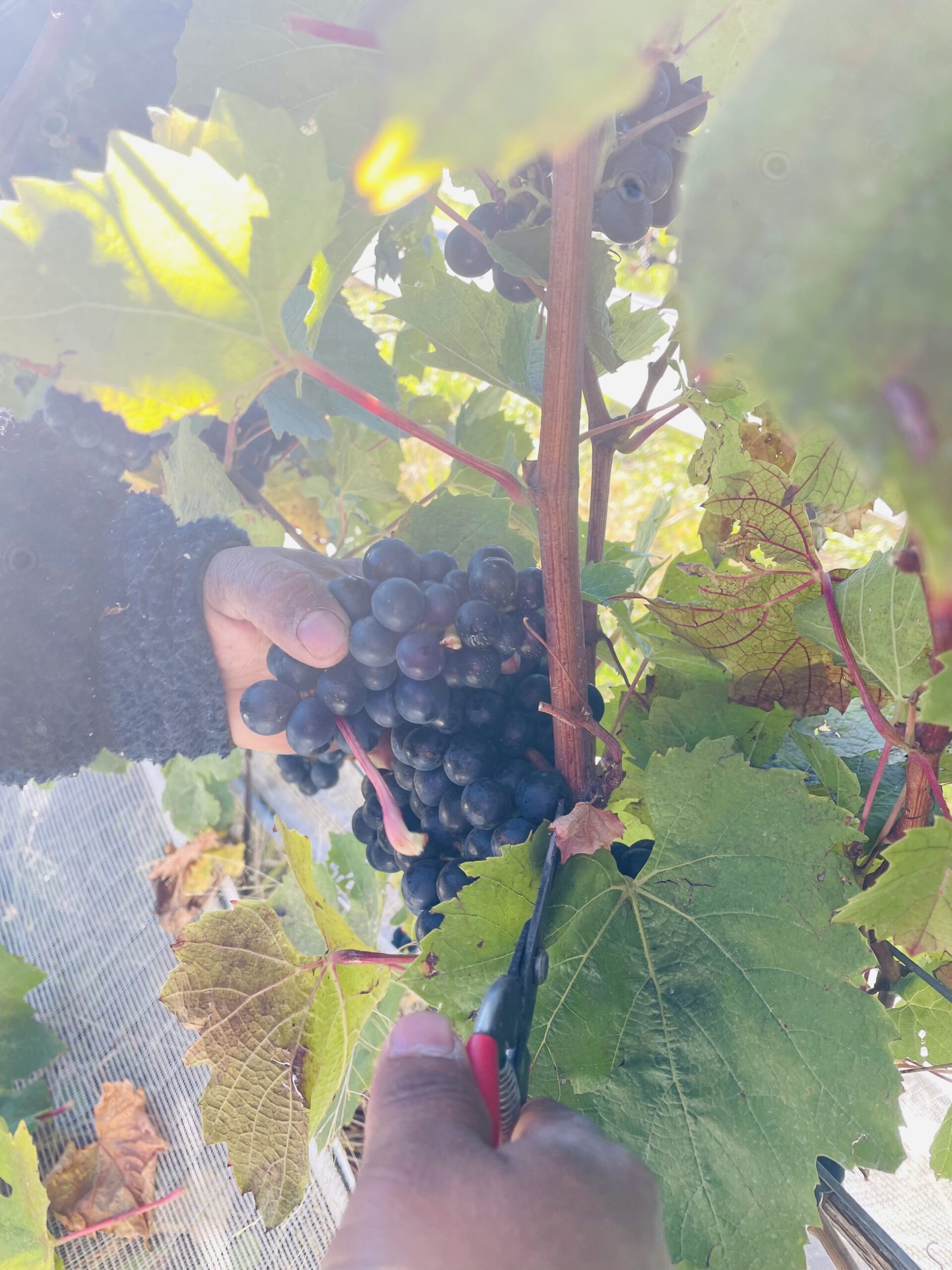
When the grapes reach their optimal ripeness, the harvest begins.
The clusters are carefully handpicked to:
- respect the balance of sugar and acidity
- preserve freshness and delicate aromas
- and faithfully translate the terroir into the wine
The harvest is the culmination of months of dedicated work and care.
A Cycle That Begins Anew Each Year
After the harvest, the vines prepare once again for winter, closing the annual loop.
Our mural “Au fil des vignes” (Through the Vines) illustrates this continuous motion, reminding us that the winemaker’s work is an ongoing dialogue with nature.
Understand the Vines by Visiting Montvinéa
Observing the vineyard throughout the seasons helps us better appreciate the wine we enjoy. Every bottle is the result of:
- a natural cycle
- meticulous care
- and daily attention
At Montvinéa, taking care of the vines means respecting the rhythm of nature, season after season.